

Consumer
Consumer behavior and market dynamics shaping sporting goods demand—tracking demographics, participation patterns, lifestyle trends, emerging segments, regional growth hotspots, and the cultural forces influencing who buys, why they buy, and how preferences are shifting.
Latest

Dressed to the Nine (iron)
South Korea buys nearly half the world’s golf fashion: a $4 billion market powered by women, status and lifestyle wear.
SGIE Daily Digest
Stay informed. Stay ahead.
Every weekday in your inbox.
The news, analysis and competitive signals that matter — curated for industry professionals.
Sign up for free

Exclusive data: Will Anta’s investment in Puma spark a China revival?
Anta took a 29% stake in Puma at the start of 2026. Can it do for Puma what it did for FILA, Descente and Salomon? Our new report with Hot Pot China unpacks the data.

Activewear sells confidence. The data disagrees.
A peer-reviewed study finds no link between activewear engagement and female body confidence, contradicting a core industry marketing claim.

Sports moments reward brands across all screens
Nine-country study of 9,000 sports fans shows where attention concentrates and how consistent cross-screen presence drives purchase.

UK study maps girls’ fading sports fandom
Four in ten young UK people cannot name a sportswoman, as new research maps how girls lose fan identity through secondary school.

China moves – and the outdoor market follows
Record tourism and spending during the 2026 Spring Festival reveal a Chinese consumer spending more on movement – and on the gear that goes with it.

US survey maps the new brand heat race
L.E.K.’s 2026 Brand Heat Index maps where HOKA, On, Arc’teryx and Salomon are gaining on legacy leaders.

Running shoes in 2025: more cushioned than ever
The sports shoe market swapped race-day fireworks for weekday miles. Gen Z embraced max-cushioned shoes for walking, running and commuting.

Gen Z chooses fitness over social media, Strava study reveals
Gen Z is turning away from social media toward active lifestyles, with running clubs, weight training and fitness spending on the rise in the US.

Women’s shoes still don’t fit
A new study shows most running shoes are still built for men’s anatomy — leaving women runners with discomfort, fit issues, and preventable injuries

Women are massive sports fans, yet feel unseen
A new study reveals that many women sports fans feel misunderstood by brands and leagues.

Future Fatigue: How brands can help consumers out of climate paralysis
Fredrik Ekström unpacks ‘Future Fatigue’ — why consumers care about climate but feel too overwhelmed to act, and what brands can do about it.

From signal to substance: The new rules of consumer trust
German consumers demand proof over promises. Fredrik Ekström shows why brands must move from slogans to substance to earn trust.

Second-hand: From sustainability paradox to business case
Resale is moving from niche to growth engine. Fredrik Ekström explores how second-hand is becoming a business case.
Exclusive data: How Chinese consumers shop for outdoor apparel online
Explore key insights from the 2024–25 China Outdoor Apparel: 2024–25 Ecomm Report, including platform shifts, premiumization trends, and brand strategies from Nike, Anta and Hoka One.

Circular economy: Survey suggests disruption
”The Tipping Point: Building trust in the circular economy” identifies key drivers for a change to circularity.

Exclusive data: How chinese consumers shop for sports footwear online
Explore key insights from the 2024–25 China Sports Footwear Ecomm Report, including platform shifts, premiumisation trends, and brand strategies from Nike, Anta and Hoka One.

Consumer spending 2025 signals cooling growth and rising inequality
Global consumption continues to rise, but the pace is slowing. According to World Data Lab’s latest World Consumer Outlook 2025 (WCO#7), presented on May 15 alongside insights from a panel of chief economists, spending patterns are shifting regionally, demographically, and structurally.

How sporting goods brands can proactively combat counterfeits
Explore the complex landscape of combatting counterfeits with our legal expert Jochen Schäfer. Delve into the evolving strategies, collaborative initiatives, and advanced technologies shaping brand protection in the sporting goods industry.
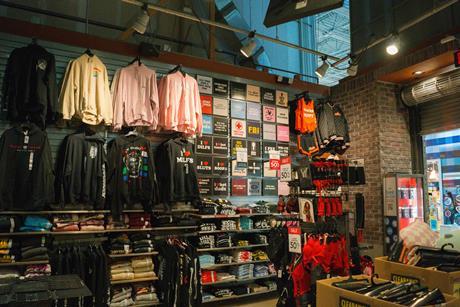
US sporting goods spending falls 9% – report
New US transaction data shows a 9% year-over-year decline in sporting goods spending, with middle-income consumers pulling back hardest.

HYROX becomes a brand battlefield
Puma’s CEO calls HYROX a “lighthouse” partnership while Adidas launches its own hybrid race shoe. The battle for fitness racing’s commercial core is on.

UK retailers see best Boxing Day in decade
Boxing Day footfall in the UK jumped 4.4% year-on-year, marking the strongest increase in over a decade despite a sluggish morning start.

Sporting goods drive US holiday sales growth
November retail sales in the US climbed 4.5% year-over-year, driven by strong gains in sporting goods, digital products and clothing.

US athleisure market to hit $318bn by 2035
The US athleisure market is projected to reach over $318bn by 2035, driven by sustainability, digital channels and lifestyle shifts.

Asics wins over running enthusiasts
Asics is outperforming Adidas and Nike in the running category, driven by tech innovation and community engagement, according to Nikkei Asia.

Tracking the next stride of Germany’s performance running market 2025
Germany’s runners are consistent, data-driven, and increasingly value-conscious. These are the findings of SGI Europe’s Performance Running Report.

The German Performance Running Market 2025
How German runners choose, buy, and value their shoes. Drawing on 1,001 active runners and pricing analysis, the report covers consumer profiles, buying behaviour, channel preferences, brand choices, pricing strategy, and sustainability’s influence on purchasing decisions.

WFSGI and SFIA in joint statement for keeping sports equipment affordable
With Trump tariffs and rising sports product prices, both organizations have made a joint statement to try to prevent price increases in sports equipment.

Global footwear market expected to grow 4.2% a year to 2029
Over the period, the size of the market is expected to increase by $103.6 billion.

Cambodia’s footwear exports up 23% in 2024
In 2024, Cambodia’s footwear exports rose by 23 percent to $1.68 billion, according to the Ministry of Commerce.

Sales for the US footwear industry reached $89.2 billion in 2024
Circana’s Consumer Tracking Service shows that the athleisure category generated $31 billion in sales and was the number one segment

Global footwear market estimated at $440 billion in 2026
In 2020, the global footwear market was estimated at $384.2 billion and is expected to rise by a compound average growth rate (CAGR) of 2.3 percent to reach $440 billion in 2026, according to Reportlinker, a research institute using artificial intelligence to compile reports.
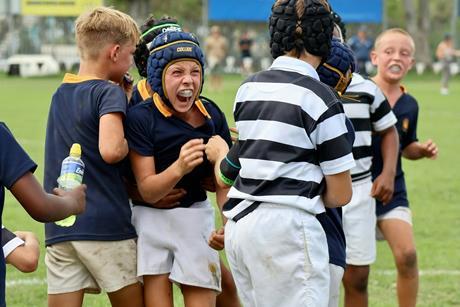
Rugby State of Play 2026
Rugby’s recovery is led by pre-teens and women. Brands still targeting adult club rugby are on the wrong side of the demand curve.

Record numbers. New players. The soccer boom in the US is already here.
SFIA data shows U.S. soccer at peak participation, driven by Hispanic growth, female re-engagement, and millennials.

Female participation reorders the US golf market
Female on-course participation in the US hit a record 8.1 million in 2025 — surpassing a 2006 peak that stood for nearly two decades.

Golf: The 2026 State of Play
The 9-hole round, screen golf and digital apps are rewriting the rulebook on who plays golf and how.

ISO 25808: Establishing global standards for the padel industry
The padel industry is building its first global technical standard. Here’s what ISO 25808 means for investors, operators and court builders.

Beyond the logo: what brands gain from mass participation sports
A 7.8% surge in event participation is reshaping where sporting goods brands can build durable equity – if they look past the finish-line banner.

Report: Europe’s fitness market breaks records in 2025
The 2026 EuropeActive/Deloitte report shows the sector surging past €39bn in revenue, with consolidation accelerating and the US penetration gap still wide open.

Under Armour and DICK’S back youth sports
Two of sport’s biggest brands are putting their weight behind a youth tournament platform with national reach.

Record US sport participation masks deep gaps
A historic milestone for US sports participation — yet most Americans still don’t meet weekly activity guidelines, new SFIA data shows.

Sport participation: Triathlon finds a new consumer
Younger athletes and rising female participation are reshaping the multisport market – and redefining who sporting goods brands need to reach.

SportsShoes Running Report: one in six Brits run
Younger generations lead UK running participation as the sport maintains a stable base — with motivations, barriers and technology habits mapped across 5,000 Brits.

Golf leads adult sport participation in Wales
Wales Government National survey confirms golf as Wales’s biggest adult sport, with membership up 7% and women’s participation nearly tripling in three years.

Women’s Football: The 2026 State of Play
196 million fans. €500m revenue. 75% of clubs without a kit sponsor. The white space in women’s football is larger than the industry thinks.

Challenge Family brings triathlon to Shanghai
The endurance events operator adds a Shanghai coastal race to its global calendar, targeting China’s growing appetite for premium participatory sport.

Social: female athletes’ biggest asset – and liability
Women’s sports revenue is growing faster than men’s. Female athletes generate more social engagement. But visibility carries a cost brands rarely pay for.

US tennis hits record 27.3 million players
Adults 35+ drove nearly all growth, while more than 4.9 million Americans picked up a racquet for the first time.

GB triathlon participation returns to growth
120,000 active triathletes recorded in 2025 – but the sport remains 28,000 below its pre-pandemic peak.

Spain sees sports participation surge to 62.7%
Ministry survey reveals sports participation jumped 5.4% since 2022, with women narrowing the gender gap and professional coaching seeing significant growth.

US golf participation hits eight-year growth streak
On-course participation surpassed 29 million in 2025, marking eight consecutive years of growth and reinforcing the sport’s resilience

Visa Study: AI reshapes winter sports participation
AI is reshaping how Americans engage with winter sports, with 44% planning snowboarding bookings inspired by the Olympics, Visa study shows.




Is your brand ready for the sustainable consumer?
Eco-conscious consumers are reshaping the sports and outdoor industry. Discover the latest trends and strategies to stay ahead in our special series.
>> Find out more
Intelligence, analysis and advice for the global sporting goods industry.
TOPICS
Corporate and FinancialRetail and Supply
Marketing
Consumer
People and HR
Events and Trade Shows
Legal
CSR and Sustainability
Technology and AI
Asia-Pacific
Athlete economy
China and APAC
MARKET ANALYSIS
Analysis and dataIndustry Scorecards
Reports
Case Studies
SERIES and SPECIALS
FIFA World Cup 2026Winter Olympics 2026
Circular Economy
Impact of Sports
Redefining CSR 2025
SUBSCRIPTIONS
Membership plansFAQs
ASK SGIE AI
For premium subscribersABOUT US
About usNewsroom and Contacts
Media solutions
- COPYRIGHT © EDM PUBLICATIONS GMBH
- Contact Us
- FAQS
- Terms and Conditions
- Privacy & Cookies Policy
- Impressum
- Issues
- Topics A-Z